Client
Sculpture Placement Group
Value
£120k
Sectors & Services
Marine Structures Heritage & Listed Concrete Repair Structural Strengthening Cleaning & Preparation External Façade Refurbishment Projects
Originally created by artist Richard Groom for the Glasgow Garden Festival of 1988, the sculpture is a culturally significant landmark that narrowly avoided demolition and had remained out of the water since the late 1980s. Constructed on a boat hull with a steel and mesh armature finished in cement render, the structure required specialist intervention to make it seaworthy once again.
The project, supported through crowdfunding and collaboration with the artist’s family and the Glasgow Science Centre, was essential to secure the sculpture’s future and enable its planned re-launch.
Concrete Repairs Ltd (CRL) was appointed in 2020 by the Sculpture Placement Group to restore the iconic Floating Head sculpture on the River Clyde in Glasgow.
SERVICES UNDERTAKEN
-
Restoration works
-
Concrete repairs to hull and structural elements
-
Structural strengthening to keel and tow points
-
DOFF steam cleaning to hull surfaces
-
Application of protective coating system
-
Internal high-strength screed installation
-
Reinstatement of cast iron cover


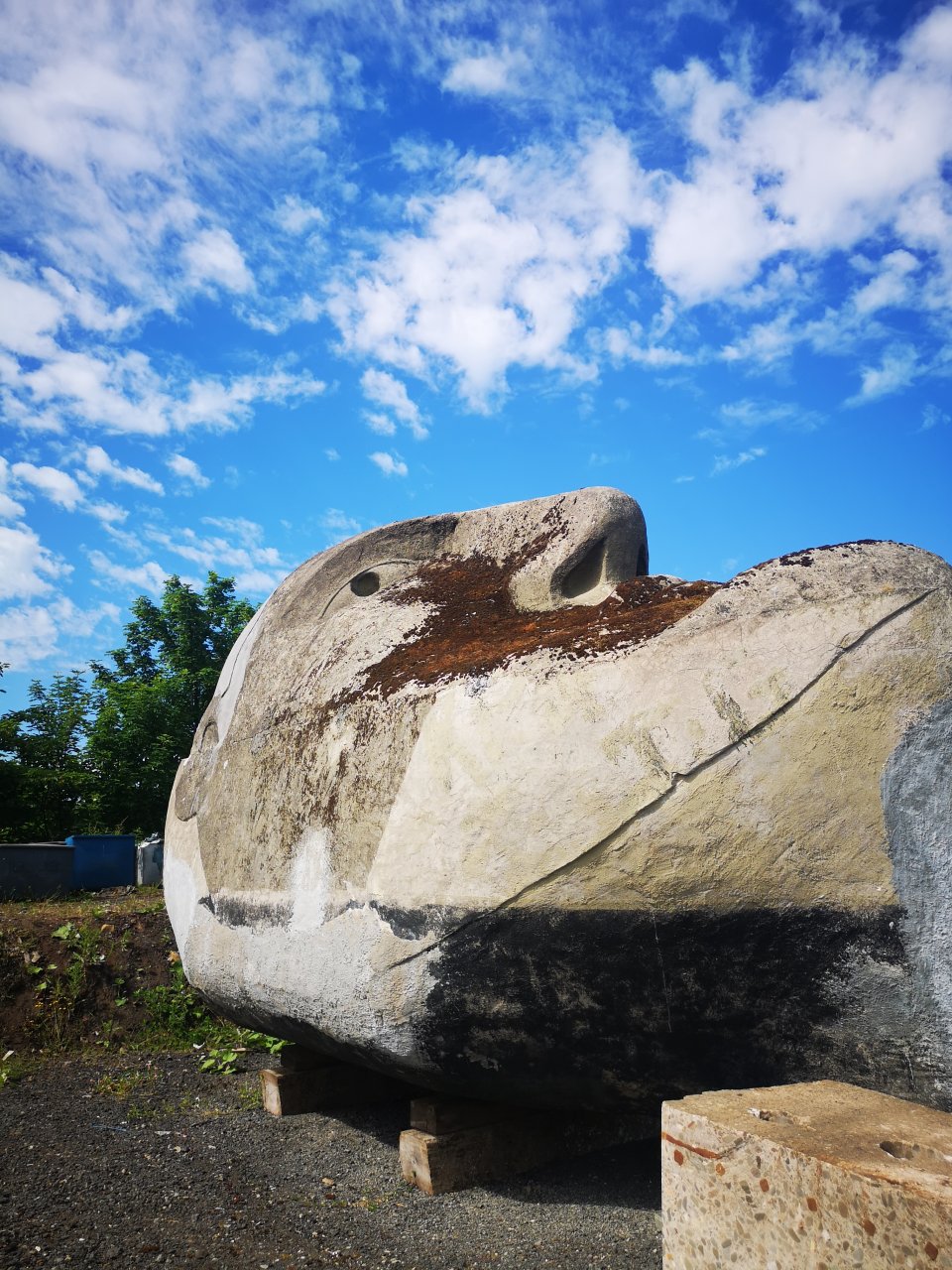
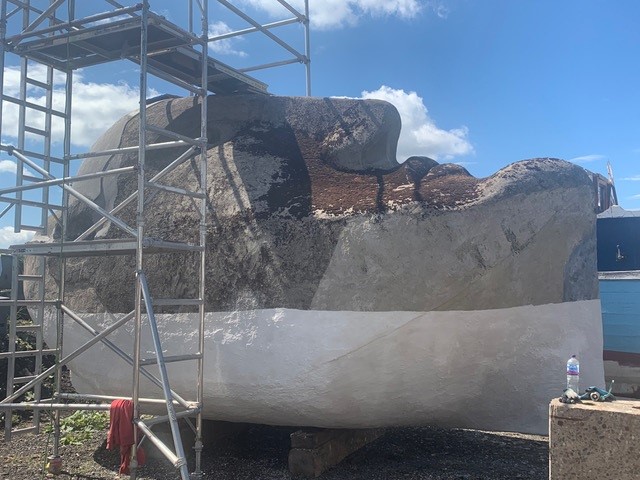
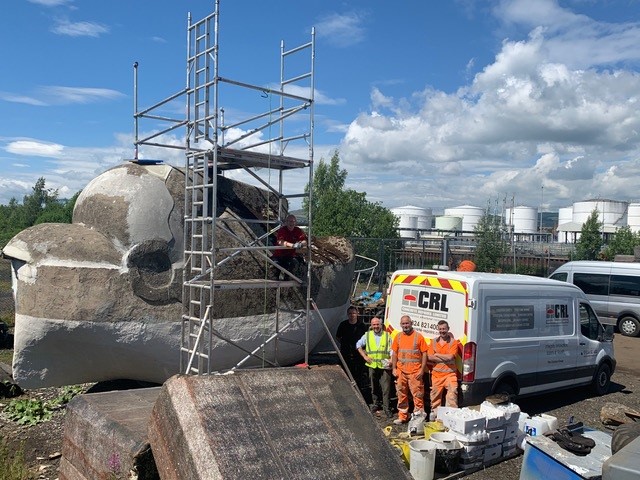
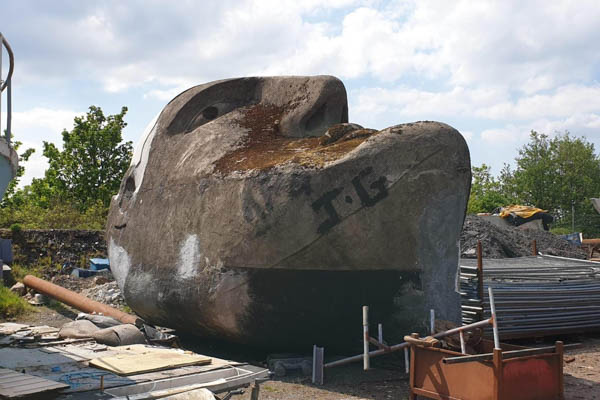
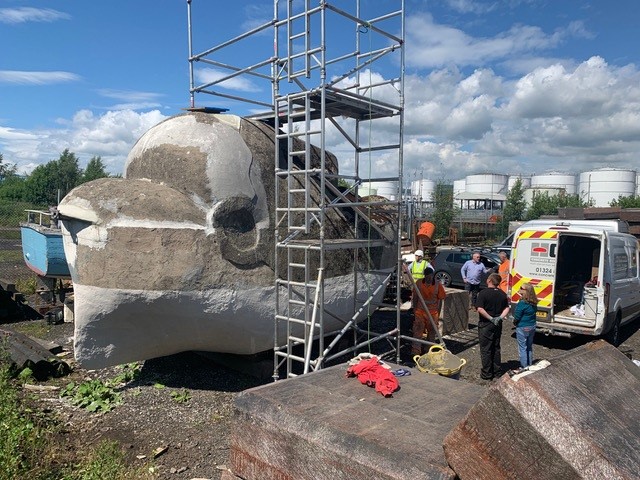
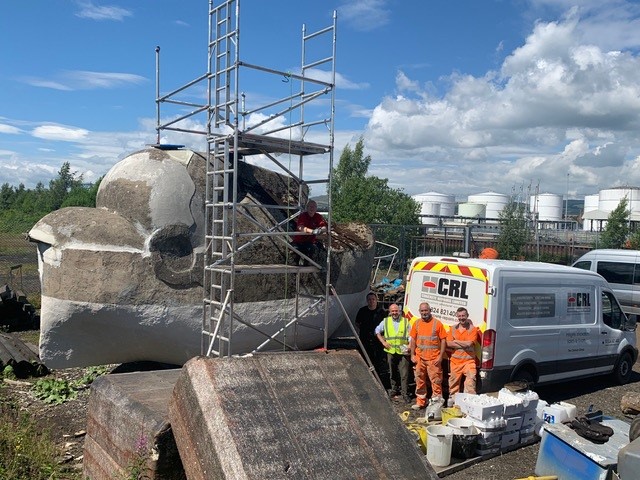
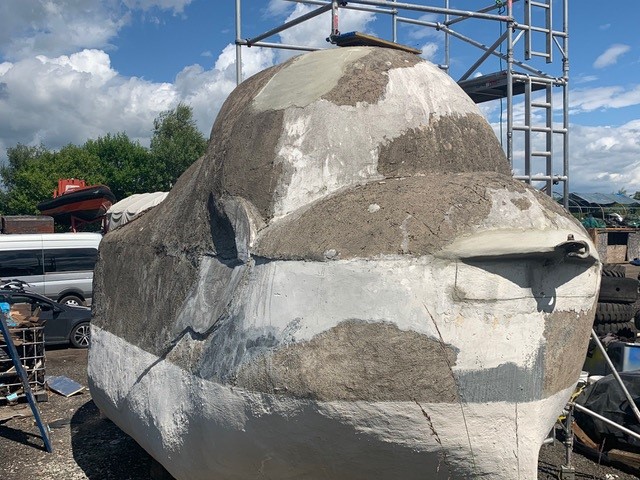
The restoration of the Floating Head required a sensitive and highly technical approach, balancing structural repairs with the preservation of original features. CRL’s scope focused primarily on reinstating the integrity of the hull below the waterline, where durability and watertightness were critical to the sculpture’s ability to float safely.
Detailed inspection identified areas where the cementitious render coating, applied over a thin concrete substrate with embedded mesh reinforcement, had delaminated. These defective areas were carefully repaired to restore continuity of the hull and reinstate protection to the underlying structure. Once repairs were completed, the entire external hull surface was prepared using high-pressure DOFF steam cleaning. This method was selected to thoroughly clean the surface while avoiding aggressive mechanical preparation that could damage the original construction.
Following preparation, two coats of Intercrete Cemprotec 851F were applied to the hull. This specialist coating system was chosen for its proven performance in marine and submerged environments, providing a robust barrier against water ingress and enhancing long-term durability. The materials for the project were generously supplied free of charge by Akzo Nobel and Kestrel Construction, supporting the wider restoration effort.
Internally, the structure was strengthened to accommodate anticipated loading during re-launch. The keel area was reinforced using a high-strength screed, improving load distribution and overall stability. Structural repairs were also undertaken to the bow and stern tow points to ensure the sculpture could be safely towed by tug along the River Clyde to its new location at the Glasgow Science Centre basin. The original cast iron cover, previously removed and later recovered from within the hull, was reinstated within the sculpture’s forehead. Above the waterline, repairs were deliberately limited, retaining weathering and moss growth as part of the sculpture’s historic character. CRL’s involvement demonstrates its capability in specialist concrete repairs and structural repairs UK, even within complex and unconventional assets.

"We repaired areas of the hull where the cement render-coating covering a thin concrete construction with embedded mesh reinforcement was delaminating, surface-prepared using high pressure steam (DOFF) and two coats of Intercrete Cemprotec 851F were applied below the waterline."
Alasdair MacDonald | Senior Estimator & Contracts Advisor | CRL
Long-term preservation was a central consideration in the restoration strategy. By addressing delamination within the cement render and reinstating a continuous protective coating system, CRL significantly improved the hull’s resistance to water ingress and future deterioration. The use of DOFF steam cleaning ensured effective surface preparation without compromising the integrity of the original materials.
The application of Intercrete Cemprotec 851F provides durable protection in a permanently wet environment, helping to mitigate corrosion risks associated with embedded reinforcement and mesh. Internal strengthening works to the keel and tow points improved resilience during handling and re-launch, reducing the likelihood of structural distress. CRL’s careful balance of repair, protection, and conservation supports extended service life, reduced maintenance requirements, and the successful reintegration of this historic structure into Glasgow’s river environment, reflecting best practice in asset management for specialist structures.
The "Head" was re-floated back in the river Clyde in late 2021.


